
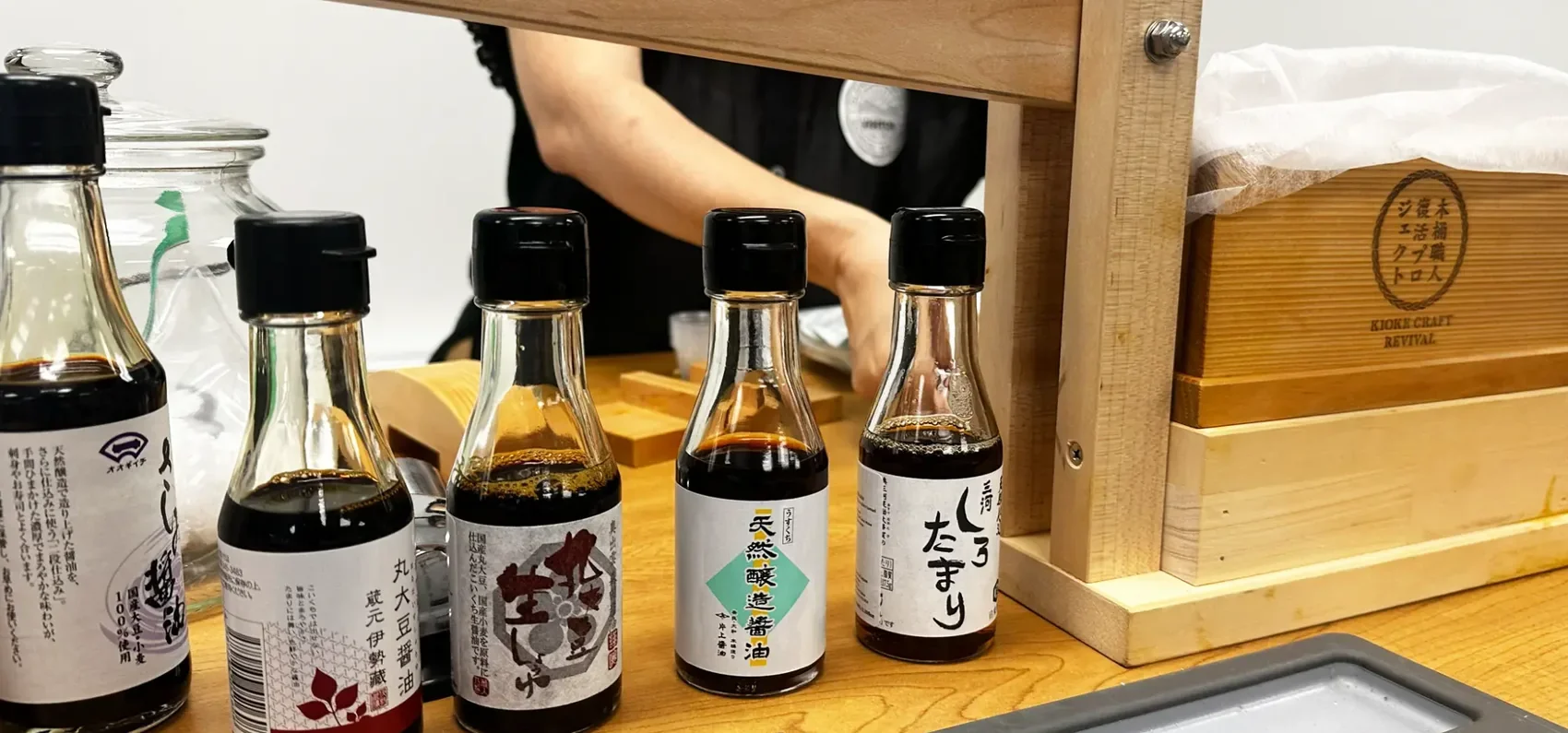
Five Japanese soy sauces at our tasting table.
On October 1—Soy Sauce Day in Japan—I brought six tasting samples into public school classrooms in the Los Angeles area.
I wanted to begin with a simple question:
What is actually inside a bottle of soy sauce?
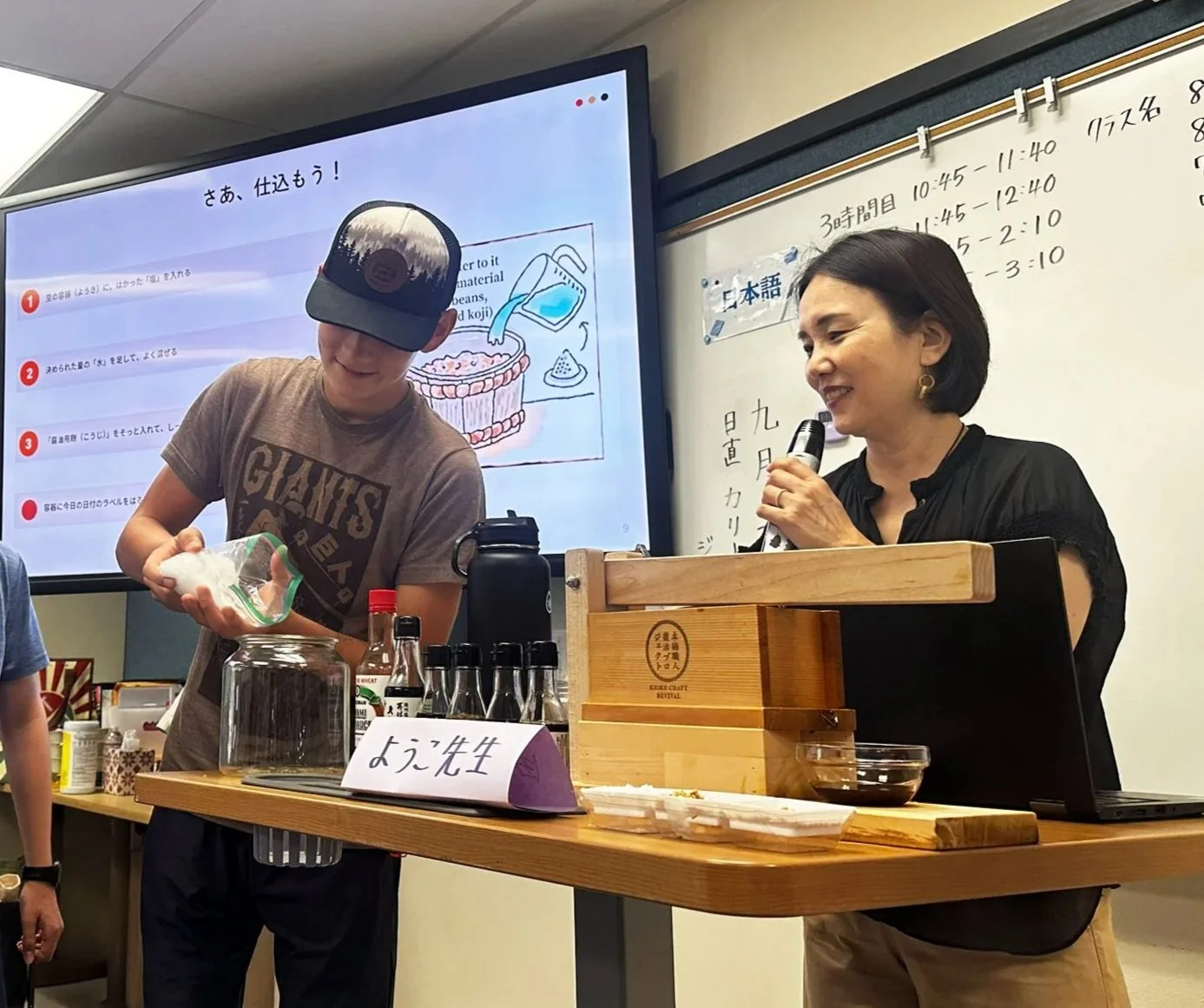
Yoko sharing Japanese fermentation with students on the first day of the school visits.
Last year, I made miso with some of these students. Seeing them again, this time to talk about soy sauce, felt special. Both foods begin with koji, but a familiar bottle of soy sauce gave us a new way into the conversation.
A place to start, wherever you’re coming from
The students I meet are in Japanese-language programs, but their experiences with the language and with Japan vary widely. Some have Japanese family connections; many do not. I don’t want a child to feel they need to know Japanese food before they can join in. Food gives us something we can look at, taste, and talk about together.
We started with soybeans, wheat, salt, water, and koji. Then we tasted five traditional types of Japanese soy sauce side by side. A sixth sample was a tomato-based alternative—a little surprise that made the tasting more fun. The children made their own guesses and noticed differences in color and flavor.
More than one way to use soy sauce
I use ready-to-use sauces too. They make a busy day easier. But I also want children to know what goes into the seasonings they see at home. Once you notice that soy sauces can taste so different from one another, you can start asking which one might work with a particular dish. It doesn’t have to be a Japanese dish.
“What I don’t want to lose is our curiosity about food.”
That curiosity matters to me more than remembering every name from the tasting. A question about an ingredient can lead to a question about a recipe, a place, or a tradition. That’s a lovely way for a child to find a connection to food culture—whether it has been part of their family life for years or is entirely new to them.
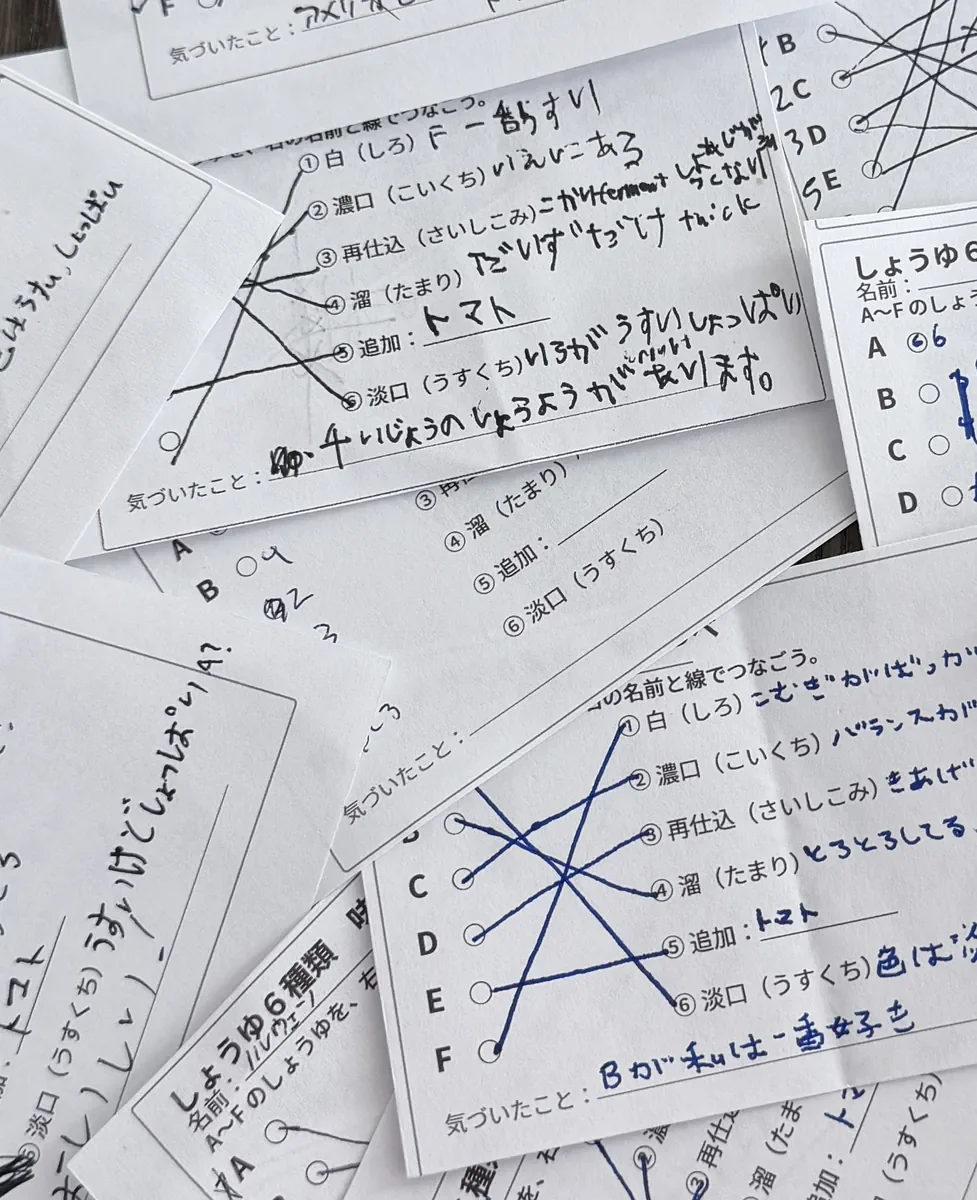
Six samples, many different observations. Notes from the tasting table.
The part that takes time
After the tasting, the students began their own soy sauce. They added salt and water, then mixed in the koji prepared for the class. The jars will stay in their classrooms for now, where the children can help care for them and see how they change over time.
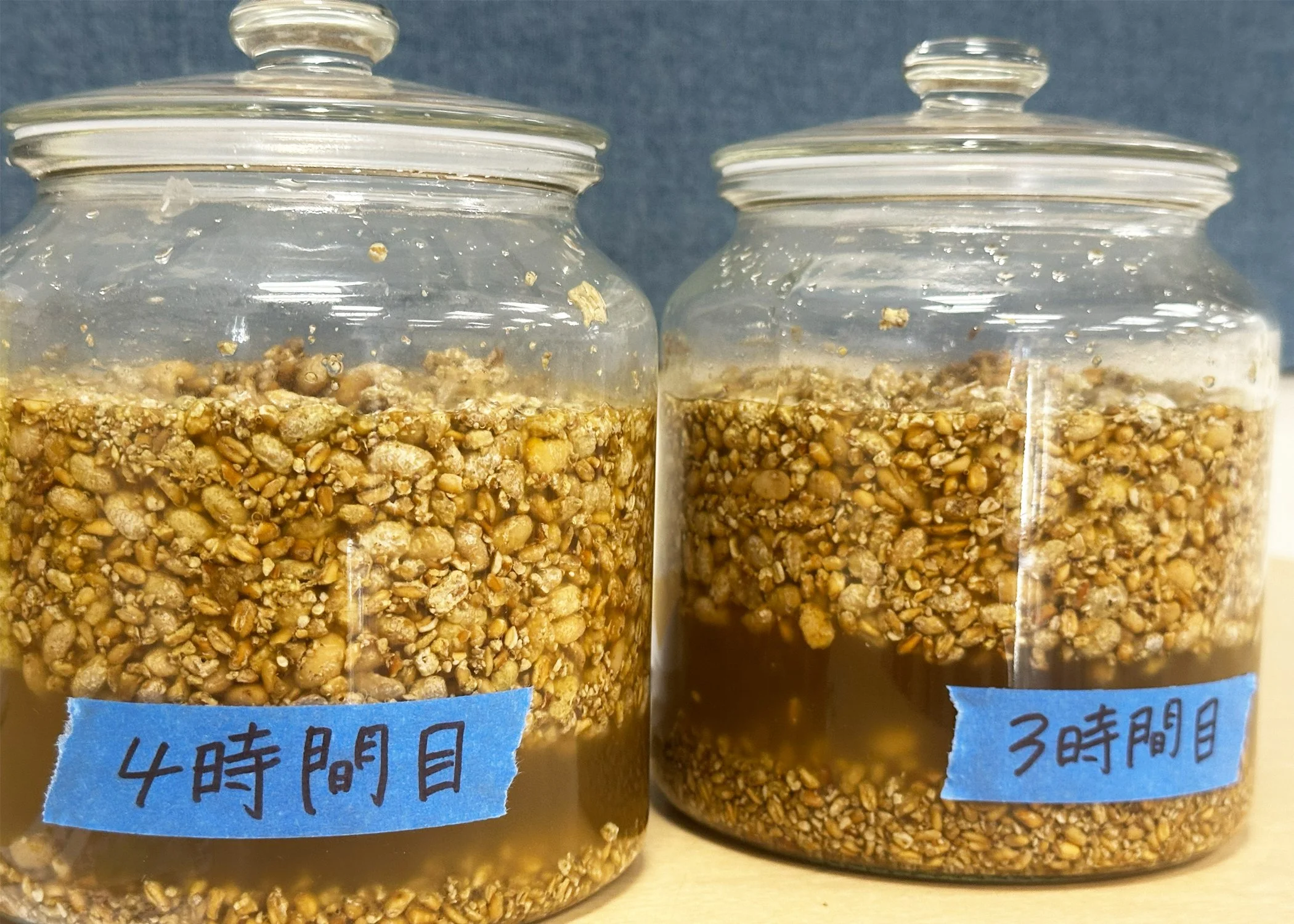
The classrooms will care for their own soy sauce as it changes over the months ahead.
I like that the lesson doesn’t end when I leave. The work of the microbes is slow, and there will be something new to notice when the students come back to the jars. I hope some of those observations make their way home: What soy sauce do we use? What else could we make with it?
Thank you to the teachers for welcoming me into their classrooms, to the families for their support, and to the students for tasting, making, and asking questions with me. This was the first stop of our school visits through January. I’m looking forward to the conversations ahead.