
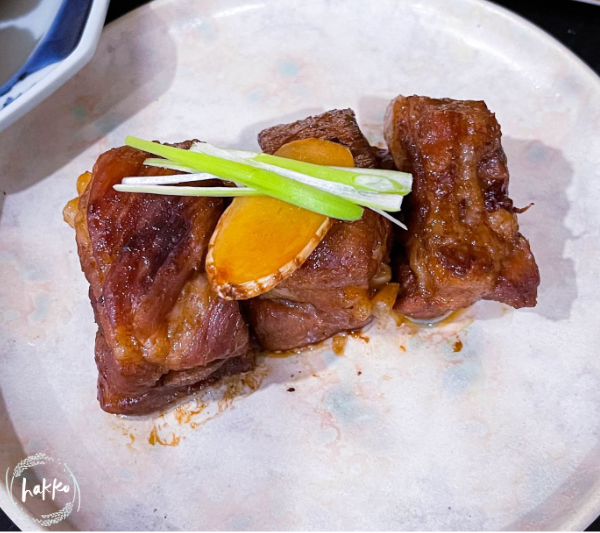
Prep Time: 15 minutes
Cook Time: 20 minutes
I chose to share this spare rib recipe because it was one of my father’s specialties when I was growing up. Watching the ribs slowly turn tender always reminds me of those peaceful family evenings.
What elevates this recipe even further is the soy sauce. I use Ise Gura Tamari, a tamari with a soft sweetness and mellow umami. It doesn’t overpower the pork; instead, it brings out its natural flavor. As it reduces, it creates a glossy glaze that is rich yet never heavy. Tamari and pork are truly a wonderful match.
Even if you don’t have Ise Gura soy sauce, tamari or a koikuchi soy sauce will still make this dish delicious.
For meat dishes especially, a longer-aged soy sauce pairs beautifully, adding depth and richness to the flavor.
-
Serves 2-3
650g pork spare ribs
For the seasoning:
¼ teaspoon salt
For the braising sauce:
3 tablespoons soy sauce
200mL water
1-2 teaspoons avocado oil
2 slices fresh ginger
1 tablespoon sugar (optional, adjust to taste)
-
Season the ribs
Rub the ribs with salt and let them sit for 5-10 minutes.
When moisture rises to the surface, pat dry with paper towel.Brown the ribs
Add the avocado oil and ginger to a pot and heat gently over low heat.
When the ginger becomes fragrant, place the spare ribs in the pot.
Turn the heat to medium and brown all sides of the ribs (except the bone side) until golden.Remove excess fat & add seasonings
Tilt the pot and wipe away the rendered fat with a paper towel.
Add the water, soy sauce, and sugar (if using).
Stir to dissolve the ingredients and bring the mixture to a gentle boil.Simmer until tender
Cover with a drop lid (otoshibuta) and simmer over low heat for 30 minutes to 1 hour, until the ribs are tender.
A good indicator is when chopsticks or a fork can pierce through the meat with little resistance.Reduce the sauce
Remove the drop lid and simmer over medium heat for 3-5 minutes, allowing the sauce to thicken and coat the ribs. Serve warm.
-
If you don’t have a drop lid (otoshibuta), take an aluminum foil and place directly on top of the food and cover the pot as you simmer.
Recommended soy sauce: Marudaizu Tamari — rich in umami but smooth and easy to use.
Available in the Premium Kioke Soy Sauce Set Vol. 1!

Inspired by Yoko’s lifelong love of fermentation and her respect for the artisans preserving Japan’s ancient food culture, this exclusive set celebrates the beauty of kioke—the wooden barrels used for brewing soy sauce for over 400 years.
Today, less than 1% of soy sauce in Japan is still made this way. Each kioke barrel is alive with microorganisms that have been nurtured for generations, creating flavors that can never be replicated. Every drop is a living connection to the brewers and families who have safeguarded this craft.
In partnership with Shokunin Shoyu, a specialty retailer that bottles regional soy sauces into 100ml portions, Yoko invites you to explore the depth and diversity of Japan’s shoyu culture. Each bottle in this trio was personally selected from breweries she visited and connected with—each one representing a story, a region, and a family’s devotion to their craft.
To Yoko, kioke culture is more than a brewing method. It’s a community of care. From the coopers who shape the barrels to the brewers who tend them, every person contributes to flavors that embody sincerity and time. She hopes that through this set, you’ll taste the individuality and living tradition of Japanese fermentation.
Inside the Set:
Nitto Jozo’s Shiro-tamari - A pale golden soy sauce with gentle umami and subtle aroma. Ideal for clear soups, egg dishes, and light dressings.
Morita Shoyu’s Marudaizu Nama Shoyu - Unpasteurized and vibrant, alive with fermentation. Perfect for sushi, sashimi, and dipping sauces.
Isegura’s Marudaizu Tamari - Smooth and rich, with deep umami from kioke fermentation. Great for hearty dishes and finishing sauces.
A beautifully designed catalog detailing each soy sauce and its origin brewery.
Each bottle embodies the heart of a region, the hands of its artisans, and the soul of Japan’s fermentation heritage.
You may also like…
On Soy Sauce Day, I began a series of school visits across the Los Angeles area. Through tasting and making soy sauce, students are discovering what goes into a familiar bottle—and the stories food can tell.